Grease is the most stubborn mess in any kitchen. It settles on the stovetop, the backsplash and the cabinet doors, and the more you cook, the faster it builds up. In warm, humid weather it also traps dust, turning a thin film into a sticky layer.
So what is the best degreaser for kitchen surfaces at home? The answer depends on the surface and on how much grease you’re dealing with. In this guide, we explain what to look for, how to use it and the habits that keep grease from coming back.
What is the best degreaser for kitchen surfaces
A degreaser is any cleaner made to break down oil and food residue so you can wipe it away instead of spreading it around. For everyday home use, a good one has:
- Real grease-cutting power. It should loosen oil on contact, not just push it across the surface.
- A formula you can use every day. It should be gentle enough for frequent use and on your hands.
- Versatility. One product that handles dishes, pans and greasy kitchen spots saves time and space under the sink.
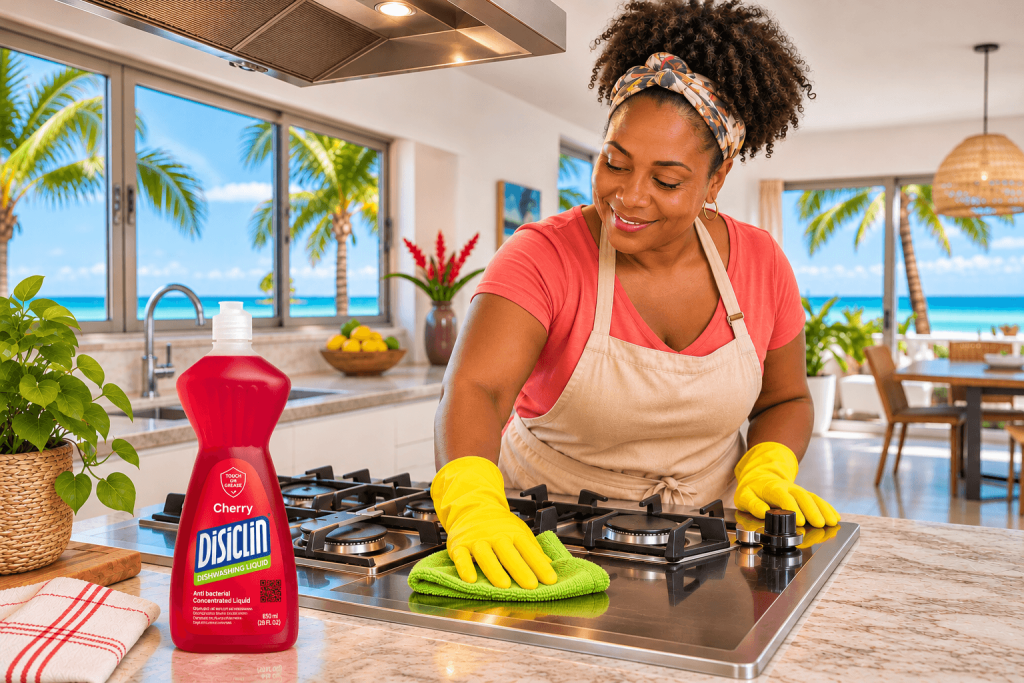
That’s why we recommend Disiclin Dishwashing Liquid for daily kitchen grease. Its concentrated, antibacterial formula cuts through grease and food residue, and you can apply a small amount directly on greasy spots before you scrub. It comes in 355 ml, 561 ml and 828 ml bottles.
How Does a Kitchen Degreaser Work: The Process Behind the Power
We recommend this routine for stovetops, backsplashes, cabinet doors and countertops.
- Let the surface cool down. Never clean a hot stovetop. Grease is easier to remove when the surface is warm, not hot.
- Remove loose residue first. Wipe away crumbs and food bits with a dry paper towel so you’re not spreading them around.
- Apply the product. For light grease, add a few drops of Disiclin Dishwashing Liquid to a damp sponge or cloth. For tougher spots, apply a small amount directly on the greasy area.
- Give it a moment. Let the product sit for a minute or two so it can loosen the grease. Wiping immediately means more scrubbing.
- Scrub with the right tool. Use a soft sponge or microfiber cloth on countertops and cabinets, and a soft brush on tile grout. Avoid steel wool on stainless steel: it leaves scratches where grime collects.
- Rinse and dry. Wipe the surface with clean water to remove any soap residue, then dry it. Leftover residue attracts dust and makes surfaces sticky again faster.
For very heavy buildup, like a range hood that hasn’t been cleaned in months, repeat the process or soak removable parts in warm water with a little dishwashing liquid before scrubbing.
Where Grease Hides in Your Kitchen
- Stovetop and burners: splatters bake on every time you cook.
- Backsplash: the wall behind the stove collects a fine layer of oil.
- Range hood and filters: they trap the grease that rises with steam.
- Cabinet doors and handles: especially those near the stove, where greasy hands touch them.
- Microwave and fridge handles: small surfaces you touch with greasy fingers.
Cleaning these spots once a week keeps grease from building into a layer that takes much longer to remove. For pots and pans, our guide on dishwashing that doesn’t feel like a chore has quick habits that help.
Benefits and Advantages: Why Choosing Right Actually Matters
- Less scrubbing. A product that loosens grease on contact means less time and effort.
- Surfaces that last longer. Gentle formulas and soft tools protect your finishes from scratches and dullness.
- A fresher kitchen. Grease holds onto food odors; removing it regularly keeps the kitchen smelling clean.
- Fewer products under the sink. One reliable product for dishes and greasy spots replaces several half-used bottles.
Common Mistakes and How to Avoid Them When Choosing What is the Best Degreaser for Kitchen Surfaces
- Using the same product on every surface. Natural stone, like marble, is sensitive to strong cleaners. Check that your product is suitable for the surface, and test it on a small hidden area first.
- Using too much product. Extra product leaves a film that attracts more dust and grease.
- Not giving the product time. Spraying and wiping immediately is the main reason people end up cleaning the same spot twice.
- Skipping the rinse. Soap residue left on surfaces makes them sticky and dull.
- Mixing cleaners. Never mix dishwashing liquid with bleach or other household chemicals.
A Grease-Free Kitchen Starts With the Right Habit
The best degreaser for kitchen surfaces at home is one that cuts grease fast, is gentle enough for daily use and fits into a routine you’ll actually keep. Try Disiclin Dishwashing Liquid on your next kitchen clean, and find more practical tips on the Disiclin blog.
Frequently Asked Questions
Can I use dishwashing liquid as a kitchen degreaser?+
How often should I degrease my kitchen?+
Can I use Disiclin Dishwashing liquid in the dishwasher?+
What should I avoid on stainless steel?+
Escrito por
Maria Camila Giraldo C.
Analista en Marketing Digital