You wipe the counters, mop the floors and the house looks spotless. But looking clean and being disinfected are not the same thing. Many households skip the step that actually removes germs, simply because no one ever explained the difference.
In this guide, we walk you through how to disinfect your home step by step, which surfaces need the most attention and the small mistakes that cancel out all your effort.
What Does It Mean to Disinfect Your Home
These three words often get used as if they were the same:
- Cleaning removes dirt, grease and dust from a surface.
- Sanitizing lowers the number of germs on a surface.
- Disinfecting uses a product designed to kill germs on hard surfaces, even when the surface already looks clean.
Germs move around the house through hands, shared objects and surfaces everyone touches. Someone with a cold touches the fridge handle, then the next person touches it while making breakfast. That is why disinfecting focuses on high-touch surfaces: door handles, light switches, faucets, remote controls, fridge handles and toilet flush levers.
In Caribbean homes, heat and humidity are part of daily life. Warm, damp corners in bathrooms and kitchens are exactly where odors and grime build up fastest, so a regular routine makes a visible difference.
How to Disinfect Your Home Step by Step
We recommend this step-by-step routine for your home.
- Declutter and pre-clean. Disinfectants work best on surfaces that are already clean. Remove items from counters, wipe away crumbs and food residue, and sweep the floors before you start.
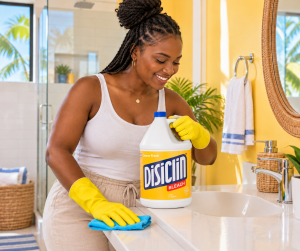
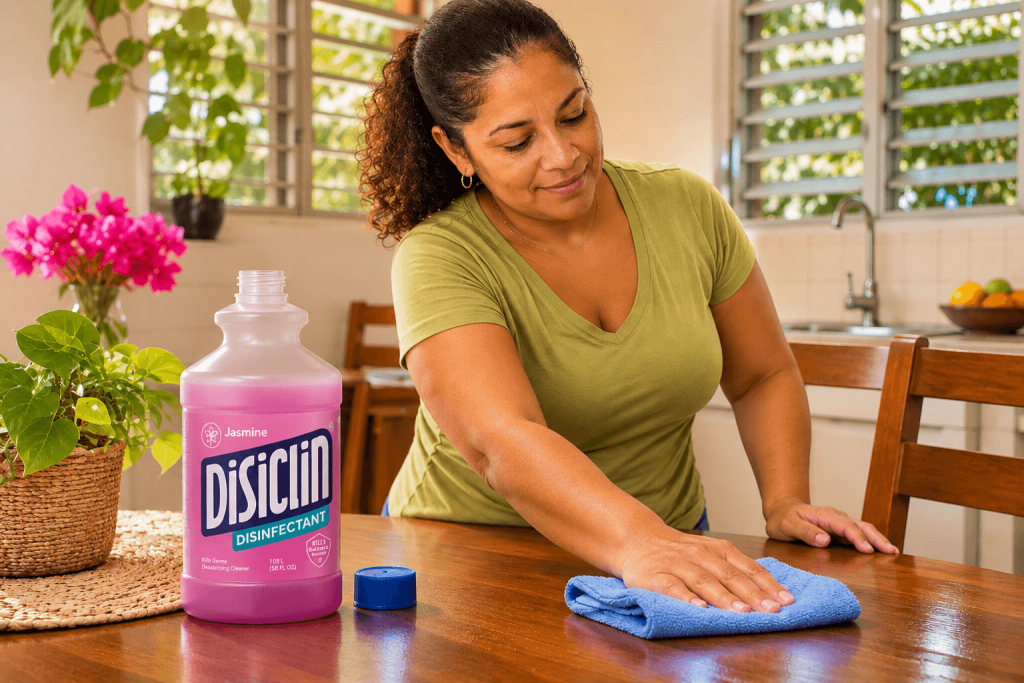
- Choose the right product for each surface. Disiclin Disinfectant is made for hard, non-porous surfaces such as floors, tiles, walls, cabinets, porcelain and toilets. Mix 2 fl. oz. (60 mL) with 1 gallon of water. For tiles, porcelain, enamel and bathtubs, Disiclin Bleach works too: mix 1/8 cup with 1 quart of water. Always follow the label on your bottle.
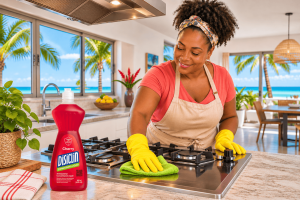
- Work room by room. Start in the kitchen, then the bathrooms, then living areas and bedrooms. In the kitchen, focus on counters, the sink and appliance handles. In the bathroom, don’t forget the toilet base, faucet handles and the grout between tiles; our guide on how to clean a bathroom covers every corner. In living areas, go for handles, switches and remote controls.
- Give the product time to work. This is the step most people skip. Disiclin Disinfectant needs to stay on the surface for 10 minutes. Disiclin Bleach diluted for hard surfaces needs 2 minutes. Spraying and wiping right away removes the product before it can do its job. Rinse with clean water afterwards if the label says so.
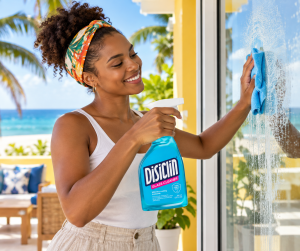
- Open the windows. Let fresh air in while you clean and after you finish. It helps surfaces dry faster and keeps the space comfortable.
- Protect your hands. Wear household gloves, especially when you work with bleach.
How often? Wipe down high-touch surfaces every few days, and give the kitchen and bathrooms a full disinfection at least once a week. If someone at home is sick, disinfect shared surfaces more often. A consistent routine also helps your floors stay clean longer.
Benefits of Regular Home Disinfection
- Fewer germs on the surfaces your family touches every day. A regular routine stops germs from moving from one hand to the next.
- A safer space for the people who need it most. Little ones play on the floor and put their hands in their mouths, older family members may be more vulnerable, and pets bring the outdoors inside.
- Fresher air and fewer lingering odors. In humid weather, bacteria and mildew in damp areas are often behind that musty smell. If odors keep coming back, see our guide on how to get rid of bad smells in the house.
- Less time cleaning later. When surfaces are disinfected regularly, grime doesn’t get the chance to build up.
Common Mistakes When Disinfecting Your Home
Many families disinfect often and still don’t see results. These are usually the reasons why:
- Using the wrong product on delicate surfaces. Bleach can damage natural stone like marble and fades fabrics such as silk or wool. Disiclin Disinfectant and Disiclin Bleach are designed for hard, non-porous surfaces, so check the surface before you apply them.
- Not respecting contact time. Spray-and-wipe is cleaning, not disinfecting. Read the label and wait the full time.
- Skipping ventilation. Closed, humid rooms dry slowly, and mildew can return quickly. Open the windows every time.
- Confusing clean with disinfected. A shiny counter can still carry germs. Disinfecting is about what you can’t see.
- Using the same cloth everywhere. Wiping the toilet and then the kitchen counter with the same cloth spreads germs around the house. Use one cloth per area and wash them in hot water.
A Cleaner, Safer Home Starts With One Routine
Knowing how to disinfect your home properly doesn’t take more time, just the right order, the right product and a few minutes of patience while it works. Explore the full Disiclin line and find the right product for every room, or browse more practical guides on the Disiclin blog.
Frequently Asked Questions
How long does it take to disinfect a home?+
How much does professional home disinfection cost?+
What types of homes or situations require disinfection?+
What are the main benefits of disinfecting your home regularly?+
How can I get started with DISICLIN home disinfection services?+
Escrito por
Maria Camila Giraldo C.
Analista en Marketing Digital
¿Necesitas ayuda con tu estrategia digital?
Nuestro equipo de expertos está listo para ayudarte a crecer.
Hablar con un experto →